Mental Health Promotion & Prevention
Policy Toolkit for a Population Approach
EFPA Standing Committee Psychology in Health
Mental health difficulties affect people across the lifespan. Although effective treatments continue to be developed, mental health promotion and prevention remain comparatively under-resourced. Evidence indicates that well-designed prevention and promotion programmes can improve well-being and reduce the risk or burden of some mental health problems; however, effects vary according to the intervention, population and implementation context.
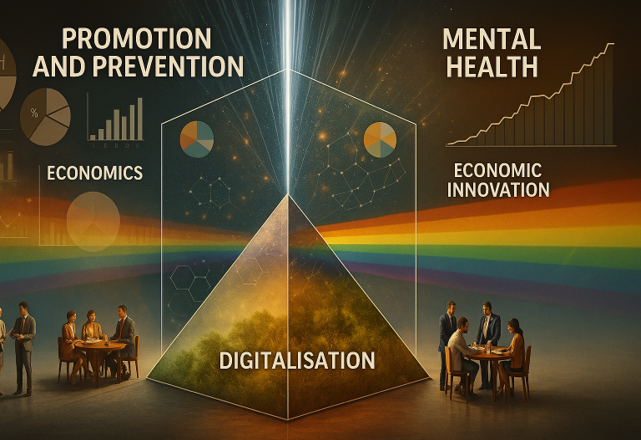
It is time to bring evidence on mental health promotion and prevention into policy discussions across Europe. In 2023, EFPA invited its Full Member psychologists’ associations to contribute to the Standing Committee on Psychology in Health. Thirty-three psychologists representing twenty-one countries were appointed. Work was organised around three overlapping areas: prevention and promotion, digitalisation and economics. This toolkit draws together contributions across these areas.
The purpose of this toolkit is to inform policymakers about key issues in a population approach to mental health and to support psychologists in communicating evidence-informed policy options to stakeholders outside psychology.
What are Mental Health Prevention & Promotion?
Mental health is a state of mental well-being that enables people to cope with the stresses of life, realise their abilities, learn and work well, be functional in their daily living and contribute to their community1. It is an integral component of health and well-being that underpins our individual and collective abilities to make decisions, build relationships and shape the world we live in. Mental health is a basic human right2.
Mental health is more than the absence of mental disorders. It exists on a complex continuum, which is experienced differently from one person to the next, with varying degrees of difficulty and distress and potentially very different social and clinical outcomes.
Mental Health Prevention has been conceptualised as including one or more of the following:
- Stopping a problem from ever developing.
- Delaying the onset of a problem or suffering, especially for those at-risk.
- Reducing the impact of a problem behaviour on the individual and others.
- Strengthening knowledge, attitudes, coping skills and behaviours that promote emotional, social, and physical well-being.
- Promoting institutional, community, and government policies that further physical, social, and emotional well-being of the larger community.
Mental Health Prevention:
- Is NOT a means of ensuring no suffering, distress, discomfort or challenging moments.
- Is NOT intended to distract from or reduce developments in treatments.
Mental Health Promotion is:
- Concerned with promoting the mental well-being of the general population including those at-risk from, or experiencing, mental health difficulties.
- Aimed at strengthening the ability of individuals, families and communities to cope with daily stressful events and at reducing the factors that place individuals, families and communities at-risk of diminished mental health.
- Aimed at improving everyday settings (e.g. homes, schools, communities, workplaces) impacting mental health, while also addressing the broader social, physical and economic environments which influence the mental health of populations and individuals.
More information about mental health promotion and prevention efforts is available at WHO Mental health.

Why Population Mental Health Promotion & Prevention?
There is a growing recognition that the provision of clinical services to individuals is insufficient to reduce the global burden of mental ill health. A population approach has been explicitly endorsed in the European Commission’s 2023 Communication on a comprehensive approach to mental health (reference 12), which emphasises promotion, prevention and action across policy sectors. This transformation entails putting a focus on the mental health of the whole population (not only on individuals struggling with mental health conditions), placing a greater emphasis on promotion and prevention, by shaping environments in ways that promote optimal mental health and by building skills that enhance resilience.
Among the clearest arguments for a population approach towards mental health promotion and prevention are:
- Well-designed preventive approaches can reduce subsequent mental health needs and associated costs, although effectiveness and value for money depend on the intervention and context.
- Level and intensity of mental health difficulties across age groups continue to rise, despite advances in treatment.
- Investing in promoting healthy ways of living makes economic sense.
- Prevention benefits are demonstrated through reductions of illness and problem behaviours, enhancement of human functioning, and reduced health care costs.
"A Stitch in Time Saves Nine!"
(Francis Baily, 1797)
In 2024, EFPA produced a White Paper3 laying out how to situate psychological services throughout a stepped-care public health system. It noted that according to the European Commission, mental health care presently had not yet adequately addressed the complex challenges of mental health problems, which continue to afflict Europeans and contribute in a major way to disability globally (1 in 6 of the EU adult population).
The EFPA White Paper advocated a shift towards a public-health stepped-care approach, consistent with WHO guidance. It called for stronger psychology training and competencies, research methods and service-delivery models, and placed particular emphasis on community-based and preventive interventions, collaborative care, self-care and evidence-based practice at every level of the care pyramid (reference 3).
More information is available here: EFPA White paper: How to situate psychological services throughout a stepped-care public health system
How to do Population Mental Health Promotion & Prevention?
Throughout the lifespan, mental health is shaped by a complex interplay of individual, family, social and environmental factors, which may protect or undermine mental health. Major contributing factors are the social determinants of mental health and include contextual, structural factors and the circumstances in which people live (e.g., poverty, education, unemployment, violence, working conditions, housing, disadvantaged neighbourhoods, social cohesion and social support). Global threats such as climate change, public health emergencies and humanitarian crises increasingly shape the mental health landscape in the EU and worldwide. These large-scale disruptions exacerbate existing inequalities, destabilise communities and intensify psychological distress, particularly among vulnerable populations. Unlike social determinants of mental health rooted in local contexts, these global forces act across borders, compounding risks and undermining collective resilience. Recognising these global threats as determinants of mental health is essential to advancing equitable and sustainable mental well-being.
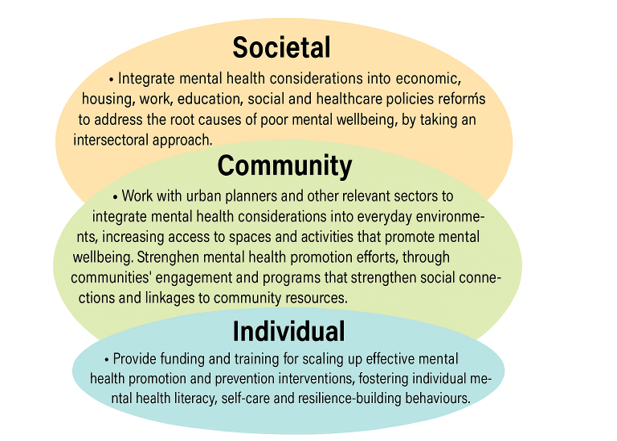
A population approach to mental health promotion and prevention involves systems transformation, addressing mental health determinants at different levels, from individuals’ skills to the broader determinants of mental health (i.e., family, community, social, economic and political factors). It includes programmes, strategies and initiatives formulated at individual, community, and societal levels to reduce risks, build skills that promote resilience, provide services at the level needed and ensure supportive environments (Figure 1).
At the individual level, achieving population impact involves scaling up effective interventions, which requires appropriate conditions for large-scale implementation (e.g., funding, training, adaptation, acceptability) and investing in novel intervention delivery systems for more equitable access, including digital interventions and diversification in providers (i.e., training of health professionals from other domains than mental health, peer specialists and lay people, community health workers, significant others and caregivers) delivering interventions (i.e., screening, referral, psychoeducation, psychotherapy). These interventions intend to empower individuals to promote and protect their well-being, including awareness campaigns and programmes promoting mental health literacy and skills.
At the community level, it involves creating safe and supportive living environments (i.e., families, neighbourhoods, schools, workplaces) that strengthen individuals’ ability to deal with everyday life challenges. Key characteristics of such environments include supportive and nurturing families, socially connected communities, access to green and blue spaces, safe and inclusive public spaces, access to leisure opportunities, school and workplace support systems, etc. Therefore, working at this level entails increasing access to activities and spaces that promote mental health, improving social support and community connectedness, and making community-level interventions available (e.g., school/workplace-based programmes, classroom curricula in skills building and social-emotional learning). Reshaping our living environments requires multi-sector collaboration (i.e., health, education, labour, transport, environment, housing, welfare, etc.).
At the societal level, we consider actions tackling structural and systemic factors (i.e., health system, education, social services, housing, etc.) that impact on mental health and explain mental health disparities. Current international policy frameworks endorse a Mental Health in All Policies (MHiAP) approach4, which considers the mental health implications of public policies across sectors and requires intersectoral action to address the social determinants of mental health (e.g., healthy living and working conditions, access to quality education, access to good quality housing, safe communities) and reduce mental health inequities. At this level, public policies, laws and regulations have a central role and cover issues as economic stability, safe and secure housing, employment, child protection, access to quality education, social inclusion, equitable mental healthcare access (e.g., universal basic income, universal mental health coverage). Socioeconomic disadvantage plays a particular role in mental health, forming a vicious cycle: people living in poverty are more exposed to adverse living environments, have fewer educational and employment opportunities, and are less able to access quality health care; people experiencing mental health conditions are more likely to lose resources and to experience social exclusion, worsening the existing conditions and increasing the risk for other adverse experiences. The reciprocal relationship between poverty and poor mental health is illustrated in Figure 2.
A growing body of research on the impact of socioeconomic disadvantage, including randomised controlled trials and natural experiments, confirms that poverty and common mental health disorders such as depression and anxiety are causally intertwined5. On the one hand, poverty directly increases the risk of mental illness through several mechanisms. Economic shocks like job loss or poor agricultural yields elevate psychological distress, while chronic poverty is linked to factors such as uncertainty, environmental stressors and poor early-life conditions that disrupt emotional development and cognitive functioning. Additionally, individuals living in poverty are more likely to face violence, trauma, and social exclusion, which further erode mental well-being. Community issues such as inadequate housing, food insecurity and lack of insurance amplify vulnerability. Importantly, interventions against poverty, including cash transfers, graduation programs and insurance schemes have been shown to reduce rates of depression and anxiety.
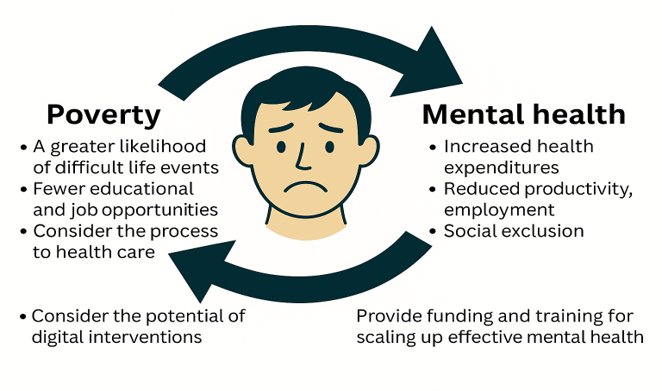
Conversely, mental health disorders can also perpetuate poverty6. Depression and anxiety impair cognitive function, reduce labour supply, and hinder educational attainment, all critical drivers of social and economic mobility. These conditions distort economic decision-making by skewing attention, beliefs, and preferences, often leading to risk aversion, fatalism, or inaction. Mental health illness reduces productivity and increases absenteeism, thereby undermining income and employability, as well as increasing healthcare expenditures, especially when comorbid with chronic illnesses. Furthermore, the stigma surrounding mental illness can lead to labor market discrimination and social isolation, exacerbating economic hardship. Crucially, treating mental illness improves economic outcomes. Interventions such as low-cost psychotherapies and behavioural activation programs have been found to increase employment, reduce health care costs, and improve intergenerational outcomes.
It is worth noting the feedback loop between poor mental health and economic deprivation can create so-called “psychological poverty traps,” where poor mental health and poverty reinforce one another across time and generations – outcomes that Europe can ill afford.
Examples of good practice at each level are available in our EFPA Resource Matrix
Population Mental Health Through Different Lenses
Throughout the lifespan, mental health is shaped by a complex interplay of individual, family, social and environmental factors, which may protect or undermine mental health. Major contributing factors are the social determinants of mental health and include contextual, structural factors and the circumstances in which people live (e.g., poverty, education, unemployment, violence, working conditions, housing, disadvantaged neighbourhoods, social cohesion and social support). Global threats such as climate change, public health emergencies and humanitarian crises increasingly shape the mental health landscape in the EU and worldwide. These large-scale disruptions exacerbate existing inequalities, destabilise communities and intensify psychological distress, particularly among vulnerable populations. Unlike social determinants of mental health rooted in local contexts, these global forces act across borders, compounding risks and undermining collective resilience. Recognising these global threats as determinants of mental health is essential to advancing equitable and sustainable mental well-being.
A population approach to mental health promotion and prevention involves systems transformation, addressing mental health determinants at different levels, from individuals’ skills to the broader determinants of mental health (i.e., family, community, social, economic and political factors). It includes programmes, strategies and initiatives formulated at individual, community, and societal levels to reduce risks, build skills that promote resilience, provide services at the level needed and ensure supportive environments (Figure 1).
At the individual level, achieving population impact involves scaling up effective interventions, which requires appropriate conditions for large-scale implementation (e.g., funding, training, adaptation, acceptability) and investing in novel intervention delivery systems for more equitable access, including digital interventions and diversification in providers (i.e., training of health professionals from other domains than mental health, peer specialists and lay people, community health workers, significant others and caregivers) delivering interventions (i.e., screening, referral, psychoeducation, psychotherapy). These interventions intend to empower individuals to promote and protect their well-being, including awareness campaigns and programmes promoting mental health literacy and skills.
At the community level, it involves creating safe and supportive living environments (i.e., families, neighbourhoods, schools, workplaces) that strengthen individuals’ ability to deal with everyday life challenges. Key characteristics of such environments include supportive and nurturing families, socially connected communities, access to green and blue spaces, safe and inclusive public spaces, access to leisure opportunities, school and workplace support systems, etc. Therefore, working at this level entails increasing access to activities and spaces that promote mental health, improving social support and community connectedness, and making community-level interventions available (e.g., school/workplace-based programmes, classroom curricula in skills building and social-emotional learning). Reshaping our living environments requires multi-sector collaboration (i.e., health, education, labour, transport, environment, housing, welfare, etc.).
At the societal level, we consider actions tackling structural and systemic factors (i.e., health system, education, social services, housing, etc.) that impact on mental health and explain mental health disparities. Current international policy frameworks endorse a Mental Health in All Policies (MHiAP) approach4, which considers the mental health implications of public policies across sectors and requires intersectoral action to address the social determinants of mental health (e.g., healthy living and working conditions, access to quality education, access to good quality housing, safe communities) and reduce mental health inequities. At this level, public policies, laws and regulations have a central role and cover issues as economic stability, safe and secure housing, employment, child protection, access to quality education, social inclusion, equitable mental healthcare access (e.g., universal basic income, universal mental health coverage). Socioeconomic disadvantage plays a particular role in mental health, forming a vicious cycle: people living in poverty are more exposed to adverse living environments, have fewer educational and employment opportunities, and are less able to access quality health care; people experiencing mental health conditions are more likely to lose resources and to experience social exclusion, worsening the existing conditions and increasing the risk for other adverse experiences. The reciprocal relationship between poverty and poor mental health is illustrated in Figure 2.
A growing body of research on the impact of socioeconomic disadvantage, including randomised controlled trials and natural experiments, confirms that poverty and common mental health disorders such as depression and anxiety are causally intertwined5. On the one hand, poverty directly increases the risk of mental illness through several mechanisms. Economic shocks like job loss or poor agricultural yields elevate psychological distress, while chronic poverty is linked to factors such as uncertainty, environmental stressors and poor early-life conditions that disrupt emotional development and cognitive functioning. Additionally, individuals living in poverty are more likely to face violence, trauma, and social exclusion, which further erode mental well-being. Community issues such as inadequate housing, food insecurity and lack of insurance amplify vulnerability. Importantly, interventions against poverty, including cash transfers, graduation programs and insurance schemes have been shown to reduce rates of depression and anxiety.
Conversely, mental health disorders can also perpetuate poverty6. Depression and anxiety impair cognitive function, reduce labour supply, and hinder educational attainment, all critical drivers of social and economic mobility. These conditions distort economic decision-making by skewing attention, beliefs, and preferences, often leading to risk aversion, fatalism, or inaction. Mental health illness reduces productivity and increases absenteeism, thereby undermining income and employability, as well as increasing healthcare expenditures, especially when comorbid with chronic illnesses. Furthermore, the stigma surrounding mental illness can lead to labor market discrimination and social isolation, exacerbating economic hardship. Crucially, treating mental illness improves economic outcomes. Interventions such as low-cost psychotherapies and behavioural activation programs have been found to increase employment, reduce health care costs, and improve intergenerational outcomes.
It is worth noting the feedback loop between poor mental health and economic deprivation can create so-called “psychological poverty traps,” where poor mental health and poverty reinforce one another across time and generations – outcomes that Europe can ill afford.
Examples of good practice at each level are available in our EFPA Resource Matrix
Economics of Mental Health
Throughout the lifespan, mental health is shaped by a complex interplay of individual, family, social and environmental factors, which may protect or undermine mental health. Major contributing factors are the social determinants of mental health and include contextual, structural factors and the circumstances in which people live (e.g., poverty, education, unemployment, violence, working conditions, housing, disadvantaged neighbourhoods, social cohesion and social support). Global threats such as climate change, public health emergencies and humanitarian crises increasingly shape the mental health landscape in the EU and worldwide. These large-scale disruptions exacerbate existing inequalities, destabilise communities and intensify psychological distress, particularly among vulnerable populations. Unlike social determinants of mental health rooted in local contexts, these global forces act across borders, compounding risks and undermining collective resilience. Recognising these global threats as determinants of mental health is essential to advancing equitable and sustainable mental well-being.
A population approach to mental health promotion and prevention involves systems transformation, addressing mental health determinants at different levels, from individuals’ skills to the broader determinants of mental health (i.e., family, community, social, economic and political factors). It includes programmes, strategies and initiatives formulated at individual, community, and societal levels to reduce risks, build skills that promote resilience, provide services at the level needed and ensure supportive environments (Figure 1).
At the individual level, achieving population impact involves scaling up effective interventions, which requires appropriate conditions for large-scale implementation (e.g., funding, training, adaptation, acceptability) and investing in novel intervention delivery systems for more equitable access, including digital interventions and diversification in providers (i.e., training of health professionals from other domains than mental health, peer specialists and lay people, community health workers, significant others and caregivers) delivering interventions (i.e., screening, referral, psychoeducation, psychotherapy). These interventions intend to empower individuals to promote and protect their well-being, including awareness campaigns and programmes promoting mental health literacy and skills.
At the community level, it involves creating safe and supportive living environments (i.e., families, neighbourhoods, schools, workplaces) that strengthen individuals’ ability to deal with everyday life challenges. Key characteristics of such environments include supportive and nurturing families, socially connected communities, access to green and blue spaces, safe and inclusive public spaces, access to leisure opportunities, school and workplace support systems, etc. Therefore, working at this level entails increasing access to activities and spaces that promote mental health, improving social support and community connectedness, and making community-level interventions available (e.g., school/workplace-based programmes, classroom curricula in skills building and social-emotional learning). Reshaping our living environments requires multi-sector collaboration (i.e., health, education, labour, transport, environment, housing, welfare, etc.).
At the societal level, we consider actions tackling structural and systemic factors (i.e., health system, education, social services, housing, etc.) that impact on mental health and explain mental health disparities. Current international policy frameworks endorse a Mental Health in All Policies (MHiAP) approach4, which considers the mental health implications of public policies across sectors and requires intersectoral action to address the social determinants of mental health (e.g., healthy living and working conditions, access to quality education, access to good quality housing, safe communities) and reduce mental health inequities. At this level, public policies, laws and regulations have a central role and cover issues as economic stability, safe and secure housing, employment, child protection, access to quality education, social inclusion, equitable mental healthcare access (e.g., universal basic income, universal mental health coverage). Socioeconomic disadvantage plays a particular role in mental health, forming a vicious cycle: people living in poverty are more exposed to adverse living environments, have fewer educational and employment opportunities, and are less able to access quality health care; people experiencing mental health conditions are more likely to lose resources and to experience social exclusion, worsening the existing conditions and increasing the risk for other adverse experiences. The reciprocal relationship between poverty and poor mental health is illustrated in Figure 2.
A growing body of research on the impact of socioeconomic disadvantage, including randomised controlled trials and natural experiments, confirms that poverty and common mental health disorders such as depression and anxiety are causally intertwined5. On the one hand, poverty directly increases the risk of mental illness through several mechanisms. Economic shocks like job loss or poor agricultural yields elevate psychological distress, while chronic poverty is linked to factors such as uncertainty, environmental stressors and poor early-life conditions that disrupt emotional development and cognitive functioning. Additionally, individuals living in poverty are more likely to face violence, trauma, and social exclusion, which further erode mental well-being. Community issues such as inadequate housing, food insecurity and lack of insurance amplify vulnerability. Importantly, interventions against poverty, including cash transfers, graduation programs and insurance schemes have been shown to reduce rates of depression and anxiety.
Conversely, mental health disorders can also perpetuate poverty6. Depression and anxiety impair cognitive function, reduce labour supply, and hinder educational attainment, all critical drivers of social and economic mobility. These conditions distort economic decision-making by skewing attention, beliefs, and preferences, often leading to risk aversion, fatalism, or inaction. Mental health illness reduces productivity and increases absenteeism, thereby undermining income and employability, as well as increasing healthcare expenditures, especially when comorbid with chronic illnesses. Furthermore, the stigma surrounding mental illness can lead to labor market discrimination and social isolation, exacerbating economic hardship. Crucially, treating mental illness improves economic outcomes. Interventions such as low-cost psychotherapies and behavioural activation programs have been found to increase employment, reduce health care costs, and improve intergenerational outcomes.
It is worth noting the feedback loop between poor mental health and economic deprivation can create so-called “psychological poverty traps,” where poor mental health and poverty reinforce one another across time and generations – outcomes that Europe can ill afford.
Examples of good practice at each level are available in our EFPA Resource Matrix
Digitalisation
Throughout the lifespan, mental health is shaped by a complex interplay of individual, family, social and environmental factors, which may protect or undermine mental health. Major contributing factors are the social determinants of mental health and include contextual, structural factors and the circumstances in which people live (e.g., poverty, education, unemployment, violence, working conditions, housing, disadvantaged neighbourhoods, social cohesion and social support). Global threats such as climate change, public health emergencies and humanitarian crises increasingly shape the mental health landscape in the EU and worldwide. These large-scale disruptions exacerbate existing inequalities, destabilise communities and intensify psychological distress, particularly among vulnerable populations. Unlike social determinants of mental health rooted in local contexts, these global forces act across borders, compounding risks and undermining collective resilience. Recognising these global threats as determinants of mental health is essential to advancing equitable and sustainable mental well-being.
A population approach to mental health promotion and prevention involves systems transformation, addressing mental health determinants at different levels, from individuals’ skills to the broader determinants of mental health (i.e., family, community, social, economic and political factors). It includes programmes, strategies and initiatives formulated at individual, community, and societal levels to reduce risks, build skills that promote resilience, provide services at the level needed and ensure supportive environments (Figure 1).
At the individual level, achieving population impact involves scaling up effective interventions, which requires appropriate conditions for large-scale implementation (e.g., funding, training, adaptation, acceptability) and investing in novel intervention delivery systems for more equitable access, including digital interventions and diversification in providers (i.e., training of health professionals from other domains than mental health, peer specialists and lay people, community health workers, significant others and caregivers) delivering interventions (i.e., screening, referral, psychoeducation, psychotherapy). These interventions intend to empower individuals to promote and protect their well-being, including awareness campaigns and programmes promoting mental health literacy and skills.
At the community level, it involves creating safe and supportive living environments (i.e., families, neighbourhoods, schools, workplaces) that strengthen individuals’ ability to deal with everyday life challenges. Key characteristics of such environments include supportive and nurturing families, socially connected communities, access to green and blue spaces, safe and inclusive public spaces, access to leisure opportunities, school and workplace support systems, etc. Therefore, working at this level entails increasing access to activities and spaces that promote mental health, improving social support and community connectedness, and making community-level interventions available (e.g., school/workplace-based programmes, classroom curricula in skills building and social-emotional learning). Reshaping our living environments requires multi-sector collaboration (i.e., health, education, labour, transport, environment, housing, welfare, etc.).
At the societal level, we consider actions tackling structural and systemic factors (i.e., health system, education, social services, housing, etc.) that impact on mental health and explain mental health disparities. Current international policy frameworks endorse a Mental Health in All Policies (MHiAP) approach4, which considers the mental health implications of public policies across sectors and requires intersectoral action to address the social determinants of mental health (e.g., healthy living and working conditions, access to quality education, access to good quality housing, safe communities) and reduce mental health inequities. At this level, public policies, laws and regulations have a central role and cover issues as economic stability, safe and secure housing, employment, child protection, access to quality education, social inclusion, equitable mental healthcare access (e.g., universal basic income, universal mental health coverage). Socioeconomic disadvantage plays a particular role in mental health, forming a vicious cycle: people living in poverty are more exposed to adverse living environments, have fewer educational and employment opportunities, and are less able to access quality health care; people experiencing mental health conditions are more likely to lose resources and to experience social exclusion, worsening the existing conditions and increasing the risk for other adverse experiences. The reciprocal relationship between poverty and poor mental health is illustrated in Figure 2.
A growing body of research on the impact of socioeconomic disadvantage, including randomised controlled trials and natural experiments, confirms that poverty and common mental health disorders such as depression and anxiety are causally intertwined5. On the one hand, poverty directly increases the risk of mental illness through several mechanisms. Economic shocks like job loss or poor agricultural yields elevate psychological distress, while chronic poverty is linked to factors such as uncertainty, environmental stressors and poor early-life conditions that disrupt emotional development and cognitive functioning. Additionally, individuals living in poverty are more likely to face violence, trauma, and social exclusion, which further erode mental well-being. Community issues such as inadequate housing, food insecurity and lack of insurance amplify vulnerability. Importantly, interventions against poverty, including cash transfers, graduation programs and insurance schemes have been shown to reduce rates of depression and anxiety.
Conversely, mental health disorders can also perpetuate poverty6. Depression and anxiety impair cognitive function, reduce labour supply, and hinder educational attainment, all critical drivers of social and economic mobility. These conditions distort economic decision-making by skewing attention, beliefs, and preferences, often leading to risk aversion, fatalism, or inaction. Mental health illness reduces productivity and increases absenteeism, thereby undermining income and employability, as well as increasing healthcare expenditures, especially when comorbid with chronic illnesses. Furthermore, the stigma surrounding mental illness can lead to labor market discrimination and social isolation, exacerbating economic hardship. Crucially, treating mental illness improves economic outcomes. Interventions such as low-cost psychotherapies and behavioural activation programs have been found to increase employment, reduce health care costs, and improve intergenerational outcomes.
It is worth noting the feedback loop between poor mental health and economic deprivation can create so-called “psychological poverty traps,” where poor mental health and poverty reinforce one another across time and generations – outcomes that Europe can ill afford.
Examples of good practice at each level are available in our EFPA Resource Matrix
EFPA Resource Matrix
Throughout the lifespan, mental health is shaped by a complex interplay of individual, family, social and environmental factors, which may protect or undermine mental health. Major contributing factors are the social determinants of mental health and include contextual, structural factors and the circumstances in which people live (e.g., poverty, education, unemployment, violence, working conditions, housing, disadvantaged neighbourhoods, social cohesion and social support). Global threats such as climate change, public health emergencies and humanitarian crises increasingly shape the mental health landscape in the EU and worldwide. These large-scale disruptions exacerbate existing inequalities, destabilise communities and intensify psychological distress, particularly among vulnerable populations. Unlike social determinants of mental health rooted in local contexts, these global forces act across borders, compounding risks and undermining collective resilience. Recognising these global threats as determinants of mental health is essential to advancing equitable and sustainable mental well-being.
A population approach to mental health promotion and prevention involves systems transformation, addressing mental health determinants at different levels, from individuals’ skills to the broader determinants of mental health (i.e., family, community, social, economic and political factors). It includes programmes, strategies and initiatives formulated at individual, community, and societal levels to reduce risks, build skills that promote resilience, provide services at the level needed and ensure supportive environments (Figure 1).
At the individual level, achieving population impact involves scaling up effective interventions, which requires appropriate conditions for large-scale implementation (e.g., funding, training, adaptation, acceptability) and investing in novel intervention delivery systems for more equitable access, including digital interventions and diversification in providers (i.e., training of health professionals from other domains than mental health, peer specialists and lay people, community health workers, significant others and caregivers) delivering interventions (i.e., screening, referral, psychoeducation, psychotherapy). These interventions intend to empower individuals to promote and protect their well-being, including awareness campaigns and programmes promoting mental health literacy and skills.
At the community level, it involves creating safe and supportive living environments (i.e., families, neighbourhoods, schools, workplaces) that strengthen individuals’ ability to deal with everyday life challenges. Key characteristics of such environments include supportive and nurturing families, socially connected communities, access to green and blue spaces, safe and inclusive public spaces, access to leisure opportunities, school and workplace support systems, etc. Therefore, working at this level entails increasing access to activities and spaces that promote mental health, improving social support and community connectedness, and making community-level interventions available (e.g., school/workplace-based programmes, classroom curricula in skills building and social-emotional learning). Reshaping our living environments requires multi-sector collaboration (i.e., health, education, labour, transport, environment, housing, welfare, etc.).
At the societal level, we consider actions tackling structural and systemic factors (i.e., health system, education, social services, housing, etc.) that impact on mental health and explain mental health disparities. Current international policy frameworks endorse a Mental Health in All Policies (MHiAP) approach4, which considers the mental health implications of public policies across sectors and requires intersectoral action to address the social determinants of mental health (e.g., healthy living and working conditions, access to quality education, access to good quality housing, safe communities) and reduce mental health inequities. At this level, public policies, laws and regulations have a central role and cover issues as economic stability, safe and secure housing, employment, child protection, access to quality education, social inclusion, equitable mental healthcare access (e.g., universal basic income, universal mental health coverage). Socioeconomic disadvantage plays a particular role in mental health, forming a vicious cycle: people living in poverty are more exposed to adverse living environments, have fewer educational and employment opportunities, and are less able to access quality health care; people experiencing mental health conditions are more likely to lose resources and to experience social exclusion, worsening the existing conditions and increasing the risk for other adverse experiences. The reciprocal relationship between poverty and poor mental health is illustrated in Figure 2.
A growing body of research on the impact of socioeconomic disadvantage, including randomised controlled trials and natural experiments, confirms that poverty and common mental health disorders such as depression and anxiety are causally intertwined5. On the one hand, poverty directly increases the risk of mental illness through several mechanisms. Economic shocks like job loss or poor agricultural yields elevate psychological distress, while chronic poverty is linked to factors such as uncertainty, environmental stressors and poor early-life conditions that disrupt emotional development and cognitive functioning. Additionally, individuals living in poverty are more likely to face violence, trauma, and social exclusion, which further erode mental well-being. Community issues such as inadequate housing, food insecurity and lack of insurance amplify vulnerability. Importantly, interventions against poverty, including cash transfers, graduation programs and insurance schemes have been shown to reduce rates of depression and anxiety.
Conversely, mental health disorders can also perpetuate poverty6. Depression and anxiety impair cognitive function, reduce labour supply, and hinder educational attainment, all critical drivers of social and economic mobility. These conditions distort economic decision-making by skewing attention, beliefs, and preferences, often leading to risk aversion, fatalism, or inaction. Mental health illness reduces productivity and increases absenteeism, thereby undermining income and employability, as well as increasing healthcare expenditures, especially when comorbid with chronic illnesses. Furthermore, the stigma surrounding mental illness can lead to labor market discrimination and social isolation, exacerbating economic hardship. Crucially, treating mental illness improves economic outcomes. Interventions such as low-cost psychotherapies and behavioural activation programs have been found to increase employment, reduce health care costs, and improve intergenerational outcomes.
It is worth noting the feedback loop between poor mental health and economic deprivation can create so-called “psychological poverty traps,” where poor mental health and poverty reinforce one another across time and generations – outcomes that Europe can ill afford.
Examples of good practice at each level are available in our EFPA Resource Matrix
Why Population Mental Health Promotion & Prevention?
There is a growing recognition that the provision of clinical services to individuals is insufficient to reduce the global burden of mental ill health. A population approach has been explicitly endorsed in the European Commission’s 2023 Communication on a comprehensive approach to mental health (reference 12), which emphasises promotion, prevention and action across policy sectors. This transformation entails putting a focus on the mental health of the whole population (not only on individuals struggling with mental health conditions), placing a greater emphasis on promotion and prevention, by shaping environments in ways that promote optimal mental health and by building skills that enhance resilience.
Among the clearest arguments for a population approach towards mental health promotion and prevention are:
- Well-designed preventive approaches can reduce subsequent mental health needs and associated costs, although effectiveness and value for money depend on the intervention and context.
- Level and intensity of mental health difficulties across age groups continue to rise, despite advances in treatment.
- Investing in promoting healthy ways of living makes economic sense.
- Prevention benefits are demonstrated through reductions of illness and problem behaviours, enhancement of human functioning, and reduced health care costs.
"A Stitch in Time Saves Nine!"
(Francis Baily, 1797)
In 2024, EFPA produced a White Paper3 laying out how to situate psychological services throughout a stepped-care public health system. It noted that according to the European Commission, mental health care presently had not yet adequately addressed the complex challenges of mental health problems, which continue to afflict Europeans and contribute in a major way to disability globally (1 in 6 of the EU adult population).
The EFPA White Paper advocated a shift towards a public-health stepped-care approach, consistent with WHO guidance. It called for stronger psychology training and competencies, research methods and service-delivery models, and placed particular emphasis on community-based and preventive interventions, collaborative care, self-care and evidence-based practice at every level of the care pyramid (reference 3).
More information is available here: EFPA White paper: How to situate psychological services throughout a stepped-care public health system
Lorem ipsum dolor sit amet, consectetur adipiscing elit
Lorem ipsum dolor sit amet, consectetur adipiscing elit. Sed varius laoreet euismod. Donec ac pulvinar odio. Suspendisse potenti. Fusce eleifend ultricies lectus. Cras suscipit risus sed metus ultricies, non dictum tortor dictum. Donec fringilla tellus nec tempor consectetur. Duis vestibulum risus quis accumsan efficitur. Pellentesque habitant morbi tristique senectus et netus et malesuada fames ac turpis egestas. In faucibus, risus ut pellentesque elementum, magna velit gravida augue, et porta lorem magna nec nibh.
Lorem ipsum dolor sit amet
| Lorem | Ipsum | Amet | Lorem | Lorem |
|---|---|---|---|---|
| Lorem ipsum dolor sit amet | Lorem ipsum dolor sit amet | Lorem ipsum dolor sit amet | consectetur adipiscing elit | Brussels |
| Lorem ipsum dolor sit amet | Lorem ipsum dolor sit amet | |||
| Lorem ipsum dolor sit amet | Lorem ipsum dolor sit amet | |||
| Lorem ipsum dolor sit amet | Lorem ipsum dolor sit amet | |||
| Lorem ipsum dolor sit amet | Lorem ipsum dolor sit amet | |||
| Lorem ipsum dolor sit amet | Lorem ipsum dolor sit amet |
| Lorem | Ipsum | Amet |
|---|---|---|
| Lorem ipsum dolor sit amet | Lorem ipsum dolor sit amet | Lorem ipsum dolor sit amet |
What are Mental Health Prevention & Promotion?
Mental health is a state of mental well-being that enables people to cope with the stresses of life, realise their abilities, learn and work well, be functional in their daily living and contribute to their community1. It is an integral component of health and well-being that underpins our individual and collective abilities to make decisions, build relationships and shape the world we live in. Mental health is a basic human right2.
Mental health is more than the absence of mental disorders. It exists on a complex continuum, which is experienced differently from one person to the next, with varying degrees of difficulty and distress and potentially very different social and clinical outcomes.
Mental Health Prevention has been conceptualised as including one or more of the following:
- Stopping a problem from ever developing.
- Delaying the onset of a problem or suffering, especially for those at-risk.
- Reducing the impact of a problem behaviour on the individual and others.
- Strengthening knowledge, attitudes, coping skills and behaviours that promote emotional, social, and physical well-being.
- Promoting institutional, community, and government policies that further physical, social, and emotional well-being of the larger community.
Mental Health Prevention:
- Is NOT a means of ensuring no suffering, distress, discomfort or challenging moments.
- Is NOT intended to distract from or reduce developments in treatments.
Mental Health Promotion is:
- Concerned with promoting the mental well-being of the general population including those at-risk from, or experiencing, mental health difficulties.
- Aimed at strengthening the ability of individuals, families and communities to cope with daily stressful events and at reducing the factors that place individuals, families and communities at-risk of diminished mental health.
- Aimed at improving everyday settings (e.g. homes, schools, communities, workplaces) impacting mental health, while also addressing the broader social, physical and economic environments which influence the mental health of populations and individuals.
More information about mental health promotion and prevention efforts is available at WHO Mental health.
Why Population Mental Health Promotion & Prevention?
There is a growing recognition that the provision of clinical services to individuals is insufficient to reduce the global burden of mental ill health. A population approach has been explicitly endorsed in the European Commission’s 2023 Communication on a comprehensive approach to mental health (reference 12), which emphasises promotion, prevention and action across policy sectors. This transformation entails putting a focus on the mental health of the whole population (not only on individuals struggling with mental health conditions), placing a greater emphasis on promotion and prevention, by shaping environments in ways that promote optimal mental health and by building skills that enhance resilience.
Among the clearest arguments for a population approach towards mental health promotion and prevention are:
- Well-designed preventive approaches can reduce subsequent mental health needs and associated costs, although effectiveness and value for money depend on the intervention and context.
- Level and intensity of mental health difficulties across age groups continue to rise, despite advances in treatment.
- Investing in promoting healthy ways of living makes economic sense.
- Prevention benefits are demonstrated through reductions of illness and problem behaviours, enhancement of human functioning, and reduced health care costs.
"A Stitch in Time Saves Nine!"
(Francis Baily, 1797)
In 2024, EFPA produced a White Paper3 laying out how to situate psychological services throughout a stepped-care public health system. It noted that according to the European Commission, mental health care presently had not yet adequately addressed the complex challenges of mental health problems, which continue to afflict Europeans and contribute in a major way to disability globally (1 in 6 of the EU adult population).
The EFPA White Paper advocated a shift towards a public-health stepped-care approach, consistent with WHO guidance. It called for stronger psychology training and competencies, research methods and service-delivery models, and placed particular emphasis on community-based and preventive interventions, collaborative care, self-care and evidence-based practice at every level of the care pyramid (reference 3).
More information is available here: EFPA White paper: How to situate psychological services throughout a stepped-care public health system
How to do Population Mental Health Promotion & Prevention?
Throughout the lifespan, mental health is shaped by a complex interplay of individual, family, social and environmental factors, which may protect or undermine mental health. Major contributing factors are the social determinants of mental health and include contextual, structural factors and the circumstances in which people live (e.g., poverty, education, unemployment, violence, working conditions, housing, disadvantaged neighbourhoods, social cohesion and social support). Global threats such as climate change, public health emergencies and humanitarian crises increasingly shape the mental health landscape in the EU and worldwide. These large-scale disruptions exacerbate existing inequalities, destabilise communities and intensify psychological distress, particularly among vulnerable populations. Unlike social determinants of mental health rooted in local contexts, these global forces act across borders, compounding risks and undermining collective resilience. Recognising these global threats as determinants of mental health is essential to advancing equitable and sustainable mental well-being.
A population approach to mental health promotion and prevention involves systems transformation, addressing mental health determinants at different levels, from individuals’ skills to the broader determinants of mental health (i.e., family, community, social, economic and political factors). It includes programmes, strategies and initiatives formulated at individual, community, and societal levels to reduce risks, build skills that promote resilience, provide services at the level needed and ensure supportive environments (Figure 1).
At the individual level, achieving population impact involves scaling up effective interventions, which requires appropriate conditions for large-scale implementation (e.g., funding, training, adaptation, acceptability) and investing in novel intervention delivery systems for more equitable access, including digital interventions and diversification in providers (i.e., training of health professionals from other domains than mental health, peer specialists and lay people, community health workers, significant others and caregivers) delivering interventions (i.e., screening, referral, psychoeducation, psychotherapy). These interventions intend to empower individuals to promote and protect their well-being, including awareness campaigns and programmes promoting mental health literacy and skills.
At the community level, it involves creating safe and supportive living environments (i.e., families, neighbourhoods, schools, workplaces) that strengthen individuals’ ability to deal with everyday life challenges. Key characteristics of such environments include supportive and nurturing families, socially connected communities, access to green and blue spaces, safe and inclusive public spaces, access to leisure opportunities, school and workplace support systems, etc. Therefore, working at this level entails increasing access to activities and spaces that promote mental health, improving social support and community connectedness, and making community-level interventions available (e.g., school/workplace-based programmes, classroom curricula in skills building and social-emotional learning). Reshaping our living environments requires multi-sector collaboration (i.e., health, education, labour, transport, environment, housing, welfare, etc.).
At the societal level, we consider actions tackling structural and systemic factors (i.e., health system, education, social services, housing, etc.) that impact on mental health and explain mental health disparities. Current international policy frameworks endorse a Mental Health in All Policies (MHiAP) approach4, which considers the mental health implications of public policies across sectors and requires intersectoral action to address the social determinants of mental health (e.g., healthy living and working conditions, access to quality education, access to good quality housing, safe communities) and reduce mental health inequities. At this level, public policies, laws and regulations have a central role and cover issues as economic stability, safe and secure housing, employment, child protection, access to quality education, social inclusion, equitable mental healthcare access (e.g., universal basic income, universal mental health coverage). Socioeconomic disadvantage plays a particular role in mental health, forming a vicious cycle: people living in poverty are more exposed to adverse living environments, have fewer educational and employment opportunities, and are less able to access quality health care; people experiencing mental health conditions are more likely to lose resources and to experience social exclusion, worsening the existing conditions and increasing the risk for other adverse experiences. The reciprocal relationship between poverty and poor mental health is illustrated in Figure 2.
A growing body of research on the impact of socioeconomic disadvantage, including randomised controlled trials and natural experiments, confirms that poverty and common mental health disorders such as depression and anxiety are causally intertwined5. On the one hand, poverty directly increases the risk of mental illness through several mechanisms. Economic shocks like job loss or poor agricultural yields elevate psychological distress, while chronic poverty is linked to factors such as uncertainty, environmental stressors and poor early-life conditions that disrupt emotional development and cognitive functioning. Additionally, individuals living in poverty are more likely to face violence, trauma, and social exclusion, which further erode mental well-being. Community issues such as inadequate housing, food insecurity and lack of insurance amplify vulnerability. Importantly, interventions against poverty, including cash transfers, graduation programs and insurance schemes have been shown to reduce rates of depression and anxiety.
Why Population Mental Health Promotion & Prevention?
There is a growing recognition that the provision of clinical services to individuals is insufficient to reduce the global burden of mental ill health. A population approach has been explicitly endorsed in the European Commission’s 2023 Communication on a comprehensive approach to mental health (reference 12), which emphasises promotion, prevention and action across policy sectors. This transformation entails putting a focus on the mental health of the whole population (not only on individuals struggling with mental health conditions), placing a greater emphasis on promotion and prevention, by shaping environments in ways that promote optimal mental health and by building skills that enhance resilience.
Among the clearest arguments for a population approach towards mental health promotion and prevention are:
- Well-designed preventive approaches can reduce subsequent mental health needs and associated costs, although effectiveness and value for money depend on the intervention and context.
- Level and intensity of mental health difficulties across age groups continue to rise, despite advances in treatment.
- Investing in promoting healthy ways of living makes economic sense.
- Prevention benefits are demonstrated through reductions of illness and problem behaviours, enhancement of human functioning, and reduced health care costs.
"A Stitch in Time Saves Nine!"
(Francis Baily, 1797)
In 2024, EFPA produced a White Paper3 laying out how to situate psychological services throughout a stepped-care public health system. It noted that according to the European Commission, mental health care presently had not yet adequately addressed the complex challenges of mental health problems, which continue to afflict Europeans and contribute in a major way to disability globally (1 in 6 of the EU adult population).
The EFPA White Paper advocated a shift towards a public-health stepped-care approach, consistent with WHO guidance. It called for stronger psychology training and competencies, research methods and service-delivery models, and placed particular emphasis on community-based and preventive interventions, collaborative care, self-care and evidence-based practice at every level of the care pyramid (reference 3).
More information is available here: EFPA White paper: How to situate psychological services throughout a stepped-care public health system
Lorem ipsum dolor sit amet, consectetur adipiscing elit
Lorem ipsum dolor sit amet, consectetur adipiscing elit. Sed varius laoreet euismod. Donec ac pulvinar odio. Suspendisse potenti. Fusce eleifend ultricies lectus. Cras suscipit risus sed metus ultricies, non dictum tortor dictum. Donec fringilla tellus nec tempor consectetur. Duis vestibulum risus quis accumsan efficitur. Pellentesque habitant morbi tristique senectus et netus et malesuada fames ac turpis egestas. In faucibus, risus ut pellentesque elementum, magna velit gravida augue, et porta lorem magna nec nibh.
Lorem ipsum dolor sit amet
| Lorem | Ipsum | Amet | Lorem | Lorem |
|---|---|---|---|---|
| Lorem ipsum dolor sit amet | Lorem ipsum dolor sit amet | Lorem ipsum dolor sit amet | consectetur adipiscing elit | Brussels |
| Lorem ipsum dolor sit amet | Lorem ipsum dolor sit amet | |||
| Lorem ipsum dolor sit amet | Lorem ipsum dolor sit amet | |||
| Lorem ipsum dolor sit amet | Lorem ipsum dolor sit amet | |||
| Lorem ipsum dolor sit amet | Lorem ipsum dolor sit amet | |||
| Lorem ipsum dolor sit amet | Lorem ipsum dolor sit amet |
| Lorem | Ipsum | Amet |
|---|---|---|
| Lorem ipsum dolor sit amet | Lorem ipsum dolor sit amet | Lorem ipsum dolor sit amet |
| Lorem | Ipsum | Amet |
|---|---|---|
| Lorem ipsum dolor sit amet | consectetur adipiscing elit | Brussels |
| Lorem | Ipsum | Amet |
|---|---|---|
| Lorem ipsum dolor sit amet | Lorem ipsum dolor sit amet | Lorem ipsum dolor sit amet |

European Federation of Psychologists’Associations AISBL