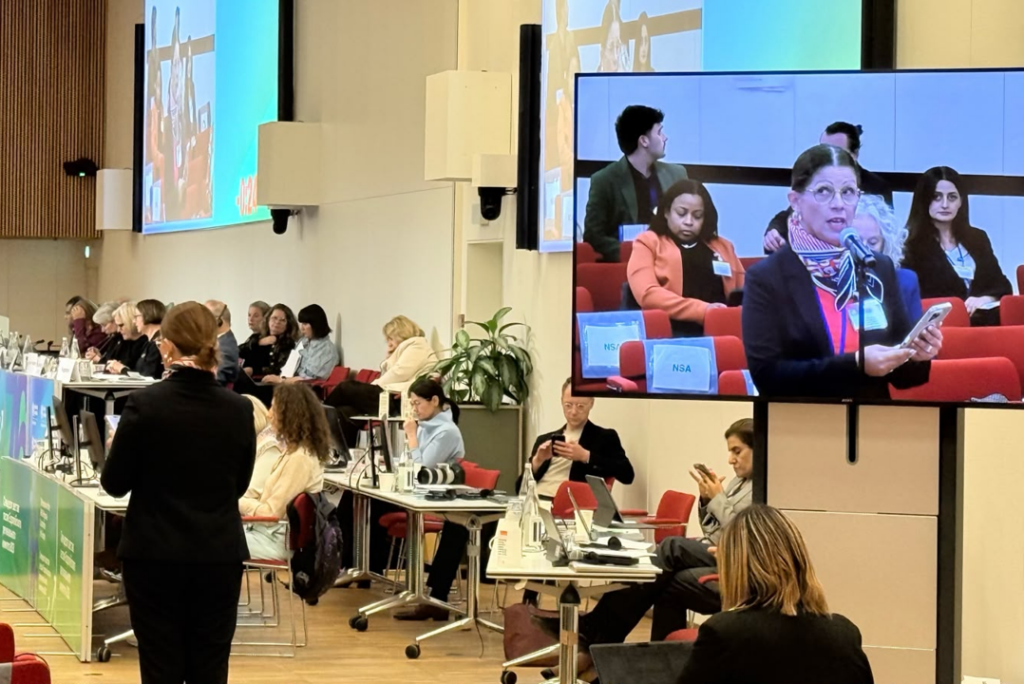
At the 76th session of the WHO Regional Committee for Europe (RC76), held in Copenhagen on 27–29 October 2026, the World Health Organization presented a discussion document entitled Toward a strategy and action plan for tackling noncommunicable diseases and advancing well-being through health promotion in the WHO European Region 2028–2037.
The document is intended to support discussion at RC76 and guide a coordinated process towards finalising the strategy for consideration at RC77.
In its written statement, EFPA welcomed this initiative and particularly supported the development of a distinct but complementary Regional Mental Health and Well-being Strategy. The statement was also endorsed by the European Public Health Association (EUPHA) and the European Respiratory Society (ERS), reflecting a shared commitment to comprehensive, evidence-informed approaches to physical health, mental health and well-being.
While physical and mental health are closely interconnected and share many determinants, EFPA and its endorsing organisations emphasise that mental health also requires dedicated policy attention, governance, investment and accountability.
The statement identifies three priorities for the development and implementation of the proposed strategies.
First, psychological expertise should be systematically integrated into health promotion, prevention and early intervention. Psychology can contribute evidence-based approaches to health-related behaviours, resilience and the social and behavioural determinants of health, with particular attention to children and young people, digital environments, healthy ageing, workplaces and vulnerable populations.
Second, stronger community-based and cross-sectoral approaches are needed. This includes accessible, person-centred services, the integration of evidence-based psychological interventions into primary care and multidisciplinary healthcare, and closer collaboration between health, education, social care, employment and community services. A comprehensive biopsychosocial approach is essential to addressing health inequalities, stigma and discrimination, and barriers to timely psychological support.
Third, the statement stresses the importance of a competent, appropriately supported and sustainable workforce. Investment in workforce planning, education, professional development and quality assurance is needed to ensure safe, effective and equitable services. Professional competence standards, ethical practice, evidence-based interventions and continuing professional development are essential to delivering quality care.
Through this contribution, EFPA, with the endorsement of EUPHA and ERS, highlights the importance of integrating psychological science and professional practice into European health policy and the development of WHO’s proposed strategy and action plan.
Read more:
- WHO discussion document: Toward a strategy and action plan for tackling noncommunicable diseases and advancing well-being through health promotion in the WHO European Region 2028–203
- Read EFPA’s written statement, endorsed by EUPHA and ERS.
- Read statements from EFPA and other non-State actors and partners at RC76.
- EuroPsy – European Standard in Psychology, EFPA’s framework for education, training and professional competence in psychology.